Tag
#web
Austin, United States / TX, 22nd July 2025, CyberNewsWire
## Summary An **authenticated path traversal vulnerability** exists in the `/json/upload` endpoint of the `pyLoad` By **manipulating the filename of an uploaded file**, an attacker can traverse out of the intended upload directory, allowing them to **write arbitrary files to any location** on the system accessible to the pyLoad process. This may lead to: * **Remote Code Execution (RCE)** * **Local Privilege Escalation** * **System-wide compromise** * **Persistence and backdoors** --- ### Vulnerable Code File: [`src/pyload/webui/app/blueprints/json_blueprint.py`](https://github.com/pyload/pyload/blob/df094db67ec6e25294a9ac0ddb4375fd7fb9ba00/src/pyload/webui/app/blueprints/json_blueprint.py#L109) ```python @json_blueprint.route("/upload", methods=["POST"]) def upload(): dir_path = api.get_config_value("general", "storage_folder") for file in request.files.getlist("file"): file_path = os.path.join(dir_path, "tmp_" + file.filename) file.save(file_path) ``` *...
### Summary All pages within the HAX CMS application do not contain headers to stop other websites from loading the site within an iframe. This applies to both the CMS and generated sites. ### PoC To replicate this vulnerability, load the target page in an iframe and observe the rendered content.  ### Impact An unauthenticated attacker can load the standalone login page or other sensitive functionality within an iframe, performing a UI redressing attack (Clickjacking). This can be used to perform social engineering attacks to attempt to coerce users into performing unintended actions within the HAX CMS application.
Cisco Talos is aware of the ongoing exploitation of CVE-2025-53770 and CVE-2025-53771 in the wild. These are path traversal vulnerabilities affecting SharePoint Server Subscription Edition, SharePoint Server 2016, and SharePoint Server 2019.
### Summary The NodeJS version of the HAX CMS application is distributed with hardcoded default credentials for the user and superuser accounts. Additionally, the application has default private keys for JWTs. Users aren't prompted to change credentials or secrets during installation, and there is no way to change them through the UI. ### Affected Resources - [HAXCMS.js](https://github.com/haxtheweb/haxcms-nodejs/blob/main/src/lib/HAXCMS.js#L1614) HAXCMSClass ### Impact An unauthenticated attacker can read the default user credentials and JWT private keys from the public haxtheweb GitHub repositories. These credentials and keys can be used to access unconfigured self-hosted instances of the application, modify sites, and perform further attacks.
### Summary The HAX CMS NodeJS application crashes when an authenticated attacker provides an API request lacking required URL parameters. This vulnerability affects the `listFiles` and `saveFiles` endpoints. ### Details This vulnerability exists because the application does not properly handle exceptions which occur as a result of changes to user-modifiable URL parameters. #### Affected Resources • [listFiles.js:22](https://github.com/haxtheweb/haxcms-nodejs/blob/main/src/routes/listFiles.js#L22) listFiles() • [saveFile.js:52](https://github.com/haxtheweb/haxcms-nodejs/blob/main/src/routes/saveFile.js#L52) saveFile() • system/api/listFiles • system/api/saveFile ### PoC 1. Targeting an instance of instance of [HAX CMS NodeJS](https://github.com/haxtheweb/haxcms-nodejs), send a request without parameters to `listFiles` or `saveFiles`. The following screenshot shows the request in Burp Suite. . This configuration is insecure for a production application because it does not protect against cross-site-scripting attacks. ### Details The `contentSecurityPolicy` value is explicitly disabled in the application's Helmet configuration in `app.js`.  #### Affected Resources - [app.js:52](https://github.com/haxtheweb/haxcms-nodejs/blob/b1f95880b42fea6ed07855b5804b29b182ec5e07/src/app.js#L52) ### PoC To reproduce this vulnerability, [install](https://github.com/haxtheweb/haxcms-nodejs) HAX CMS NodeJS. The application will load without a CSP configured. ### Impact In conjunction with an XSS vulnerability, an attacker could execute arbitrary scripts and exfiltrate data, including session tokens and sensitive local data. #### Additional Information - [OWASP: Content Security Policy](https://cheats...
### Summary The NodeJS version of HAX CMS uses an insecure default configuration designed for local development. The default configuration does not perform authorization or authentication checks. ### Details If a user were to deploy haxcms-nodejs without modifying the default settings, ‘HAXCMS_DISABLE_JWT_CHECKS‘ would be set to ‘true‘ and their deployment would lack session authentication.  #### Affected Resources - [package.json:13](https://github.com/haxtheweb/haxcms-nodejs/blob/a4d2f18341ff63ad2d97c35f9fc21af8b965248b/package.json#L13) ### PoC To reproduce this vulnerability, [install](https://github.com/haxtheweb/haxcms-nodejs) HAX CMS NodeJS. The application will load without JWT checks enabled. ### Impact Without security checks in place, an unauthenticated remote attacker could access, modify, and delete all site information.
# Summary The Dolibarr backend provides the function of adding Menu, and supports setting permissions for the added Menu: 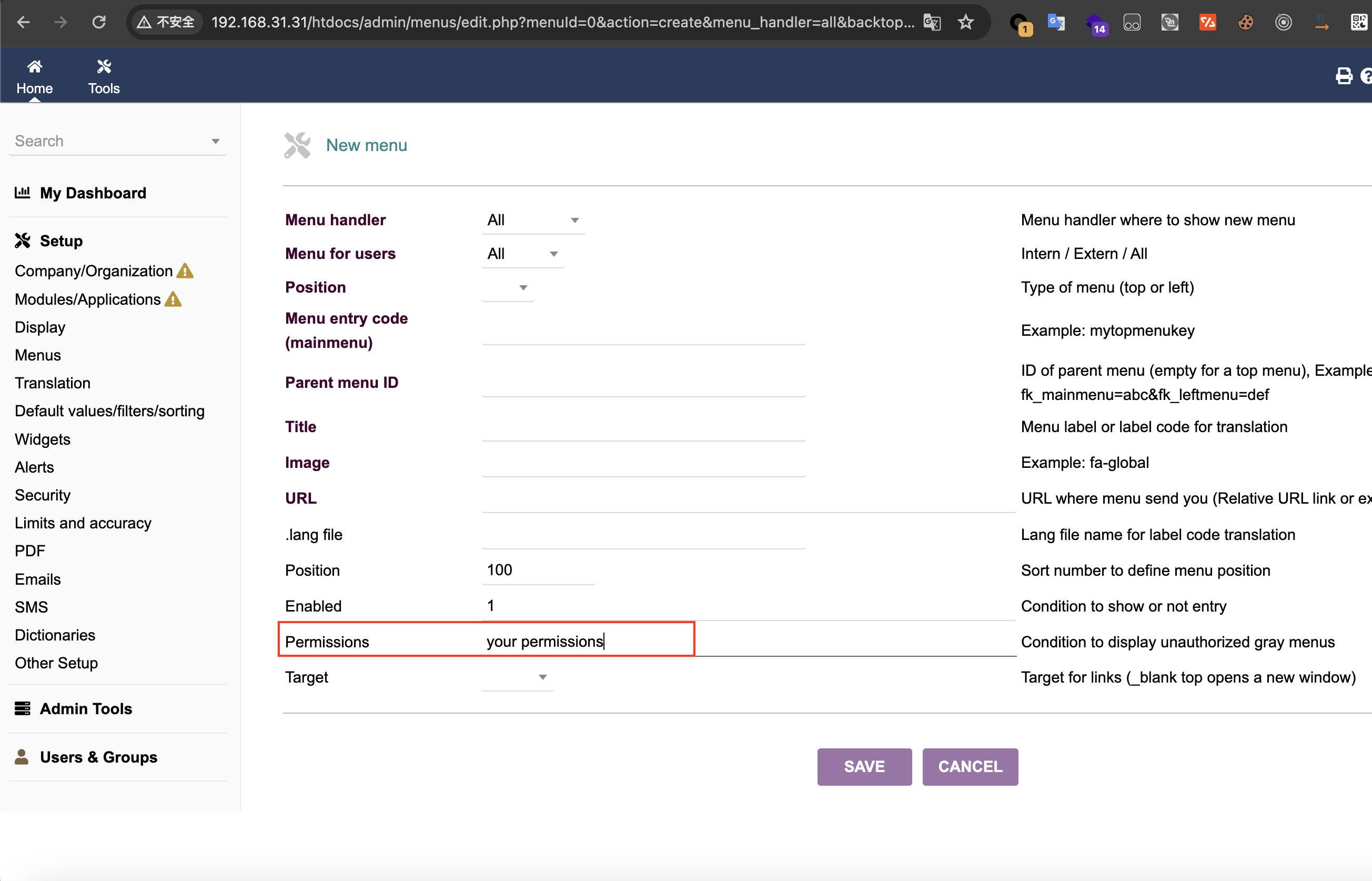 This is the trigger point of the vulnerability. The submitted permission can be php code, and it will be executed when viewing the created Menu: - htdocs/admin/menus/edit.php 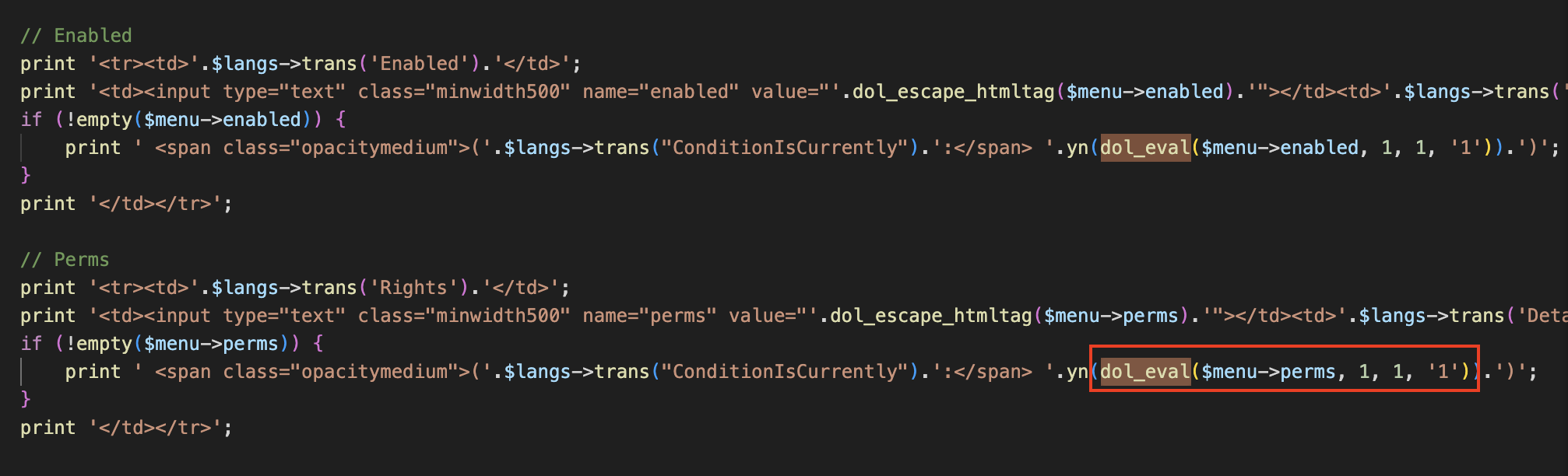 As you can see, in edit.php, if the created menu is set to `$menu->perms`, the `dol_eval()` method will be called. Following the `dol_eval()` method, we can see that it will filter the dangerous php functions in `$menu->perms` through the blacklist set in `$forbiddenphpfunctions`: 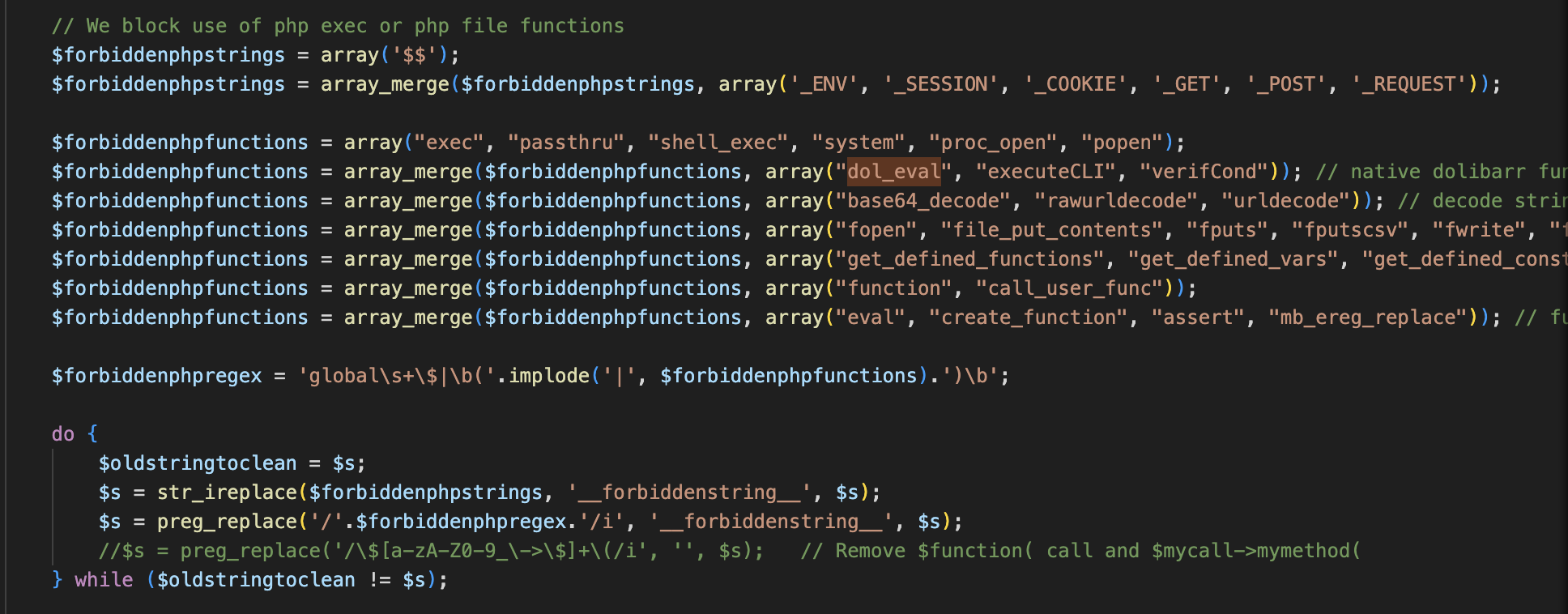 However, the blacklist here is not comprehensive. For example, the `include_once` and `require_once` functions can easily pass the bla...
### Summary form-data uses `Math.random()` to select a boundary value for multipart form-encoded data. This can lead to a security issue if an attacker: 1. can observe other values produced by Math.random in the target application, and 2. can control one field of a request made using form-data Because the values of Math.random() are pseudo-random and predictable (see: https://blog.securityevaluators.com/hacking-the-javascript-lottery-80cc437e3b7f), an attacker who can observe a few sequential values can determine the state of the PRNG and predict future values, includes those used to generate form-data's boundary value. The allows the attacker to craft a value that contains a boundary value, allowing them to inject additional parameters into the request. This is largely the same vulnerability as was [recently found in `undici`](https://hackerone.com/reports/2913312) by [`parrot409`](https://hackerone.com/parrot409?type=user) -- I'm not affiliated with that researcher but want to giv...